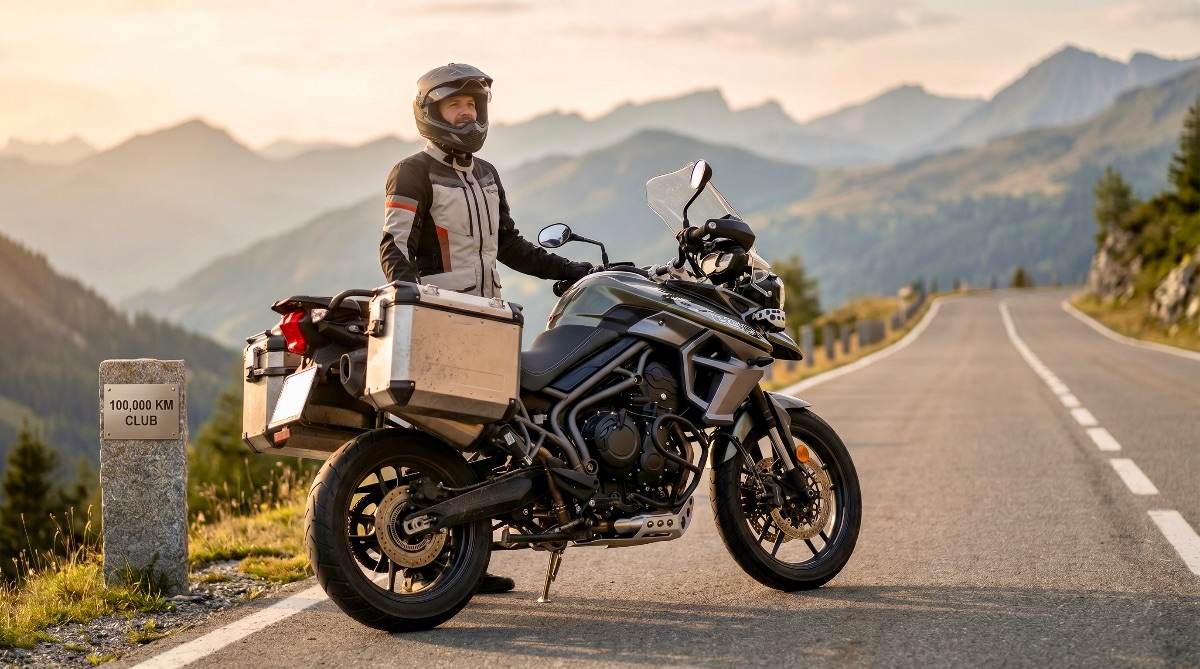
What is the Lifespan of a Motorcycle? Kilometers and Keys to Make it Last a Lifetime
Wondering how many years or kilometers your motorcycle can last? Discover the real lifespan of the engine and its main components, and the maintenance secrets to easily surpass the 100,000-kilometer mark.
One of the most frequent questions when acquiring a motorcycle is how long it will accompany us on our rides. The reality is that a motorcycle's lifespan is not measured solely in years, but in kilometers traveled and, fundamentally, in the quality of preventive maintenance it receives.
With proper care, a modern motorcycle is designed to last for decades, but to achieve this, it's necessary to understand how its engine and key components age.
How many kilometers can the engine last?
Your bike's heart is the engine, and its life expectancy is drastically defined during its initial stages. A well-done initial break-in period (during the first 1,000 kilometers) can make the difference between an engine that lasts 100,000 km or reaches 200,000 km in perfect condition.
If the engine warm-up is respected, revolutions are varied, and the first oil change is done on time, it's very common for owners to report that their engines continue to run smoothly after 50,000 or 80,000 kilometers of continuous use.
Lifespan of Key Components (Natural Wear)
A motorcycle is a dynamic assembly of parts subjected to friction. For the machine as a whole to have a long life, you need to know the "expiration date" of its main elements:
- Tires (5-6 years): Rubber ages even if the motorcycle is stationary. Motorcycle tires expire or "crystallize" after about 5 or 6 years from their manufacturing date (which you can check on the DOT code on the sidewall). After this time, they lose their grip drastically, regardless of whether the tread is still deep. Due to wear, they should be replaced when the tread depth is less than 2 mm.
- Chain Drive (20,000 - 50,000 km): The standard lifespan of a drive kit on a large road motorcycle is about 20,000 kilometers. However, if you neglect its maintenance, it can last less than 10,000 km. Conversely, with periodic cleaning and lubrication (every 500 or 1,000 km), you can extend its lifespan up to 30,000 km or even exceed 50,000 km in exceptional cases.
- Suspensions and Seals (2 years): The oil inside the fork degrades due to friction and continuous heat. It is recommended to replace the fork oil every 2 years or 12,000 kilometers to prevent it from losing its viscosity. Likewise, the rubber seals that prevent leaks usually have a lifespan of around 2 years, depending on the intensity of use.
- Coolant (2 years): In liquid-cooled engines, this fluid must be replaced every two years, always using mixtures containing anti-corrosive additives to protect the radiator's aluminum.
- Battery: If the motorcycle is parked unused, a fully charged battery can only remain in good condition for 1 to 3 months. If you let it discharge completely ("deep discharge"), it will sulfate and irreversibly lose its lifespan.
Master Keys to Extend Your Motorcycle's Life
Investing time and effort in preventive maintenance not only extends your motorcycle's lifespan but also ensures that every kilometer is safe.
- Religious Oil Changes: Oil is the engine's lifeblood. Renew the oil and filter strictly following the intervals marked by the manufacturer, as oil saturated with metal particles acts like internal sandpaper. If you're looking to extend the lifespan of your components, you can consult our lifespan and maintenance guide.
- Paint Protection (Ceramic Coating): To prevent the motorcycle from looking old on the outside, Quartz (SiO2) ceramic treatments offer extreme protection against UV rays, fading, and corrosion with durability ranging from 1 to 5 years, far superior to the few months a traditional wax lasts.
- Regular Cleaning and Inspection: Washing the motorcycle by hand is not just about aesthetics; it's the best opportunity to visually inspect for leaks, loose bolts, or worn cables. Additionally, if you're considering purchasing a used vehicle, a used motorcycle test ride is crucial to avoid surprises. For more efficient management of your motorcycle and its maintenance, you can use our My Garage section.
In short, your motorcycle's lifespan is up to you. Riding responsibly and being rigorous with maintenance is the passport to enjoying your riding companion for a lifetime. Make sure you are up-to-date with the DGT 2026 motorcycle regulations to comply with all legal requirements. And if you're one of those who enjoy exploring, we invite you to discover motorcycle routes in Catalonia.
Este artículo y su imagen se han elaborado apoyándose en la inteligencia artificial y siendo revisados por el equipo de MotoCorner antes de publicarse. Las imágenes son ilustrativas y pueden no corresponder a modelos o piezas reales.