Quick guide to buying a used motorcycle without surprises
Buying a used motorcycle doesn't have to be a gamble. In this quick guide, we review the key points for buying a used motorcycle without surprises: what to check in the documentation, how to detect damage and poor maintenance, what to ask the seller, how to take advantage of the cold test ride, and what steps to follow to safely complete the contract and change of ownership.
If you are thinking about buying a second-hand motorcycle, it's normal to have doubts: will it have been well looked after?, has it had any accidents?, are they trying to trick me? With this quick guide, you'll have the key tips for buying a used motorcycle wisely, minimizing risks and knowing what to look for before parting with your money.
1. Before seeing the motorcycle: research and filter
Save yourself time before meeting the seller:
a) Check the model and its market value
- Look for opinions on the model in forums, blogs, and YouTube (reliability, typical issues, maintenance).
- Check the average price for that model and year on various second-hand motorcycle portals.
- If the price is significantly below market value, be suspicious: it might hide problems or be a lure to "trick you."
b) Ask for photos and details in advance
- Mileage, year, extras, maintenance history.
- Ask clearly:
- "Has it had any falls or major accidents?"
- "Do you have invoices for services and repairs?"
If you already get vague or contradictory answers, it's probably not worth pursuing.
2. Documentation: the first thing to check
Before you fall in love with the motorcycle, make sure it's legally clean.
a) Basic paperwork
Ask the seller for:
- Registration certificate
- Technical data sheet / ITV card (with a valid ITV if applicable) – the DGT itself explains what documentation a vehicle should have at:
- Seller's DNI/NIE (or CIF if it's a company)
Check that:
- The owner matches the person selling it to you.
- The ITV is up to date and has no serious defects.
b) Request a DGT report
This is the safest way to know if:
- The motorcycle has liens, embargoes, ownership reservations, or seals
- It has been declared a total loss
- It has administrative issues
You can request a vehicle report by license plate from the DGT Electronic Office:
- Vehicle Report – DGT: https://sede.dgt.gob.es/es/vehiculos/informacion-de-vehiculos/informe-de-un-vehiculo/
c) Verify that taxes and fines are up to date
Before the change of ownership, the vehicle must:
- Be administratively registered
- Have paid the road tax for the previous year
- Have no pending associated fines
The DGT has a specific guide for buying used vehicles:
- Buying a second-hand vehicle – DGT: https://www.dgt.es/nuestros-servicios/tu-vehiculo/vas-a-comprar-o-vender-un-vehiculo-de-segunda-mano/comprar-un-vehiculo-de-segunda-mano/
If there's anything unusual with the paperwork, do not proceed until it's clarified.
3. Visual inspection: clues of accidents and poor maintenance
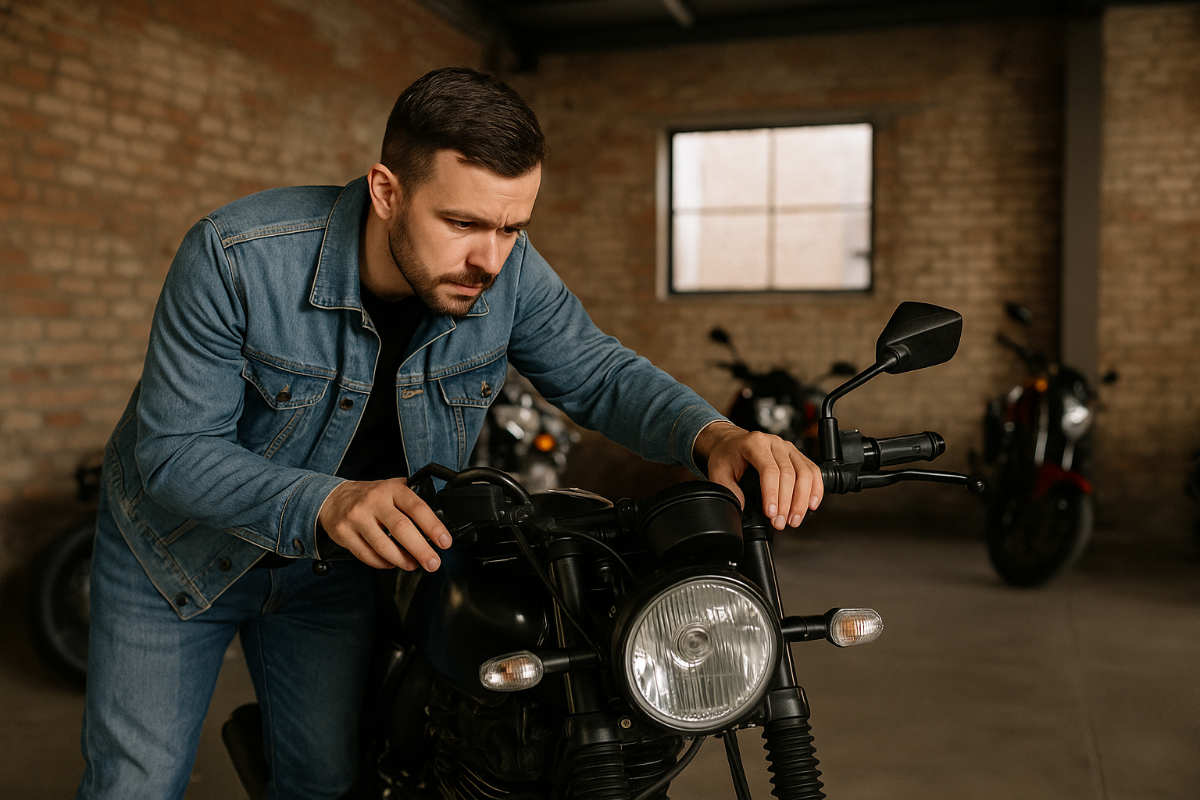
Now, it's time to see the motorcycle in person. Here begin the practical tips for used motorcycles.
a) Bodywork, plastics, and levers
- Look for scratches, scuffs, dents, and differences in paint tone. These can indicate falls.
- Check carefully:
- Brake and clutch levers
- Handlebar counterweights
- Mirrors and footpegs
These are the first parts to show damage in a fall.
b) Tires, transmission, and brakes
- Tires:
- Check wear and the manufacturing date (DOT). Very old or crystallized rubber = guaranteed extra expense.
- Transmission (chain, sprockets, and pinion):
- Look for very sharp teeth or a dry/rusty chain.
- Brake discs and pads:
- Deep grooves or almost worn-out pads indicate a lack of maintenance.
All of this is grounds for price negotiation, but it also tells you how the motorcycle has been treated.
c) Suspension and potential leaks
- Inspect the front fork: ensure there are no oil rings or wet seals.
- Press the motorcycle down and release it: it should compress and return without strange bouncing.
- Look under the engine and side covers: oil or coolant leaks = red flag.
4. Engine and cold test: the truth comes out when you start it
Ideally, the motorcycle should be cold when you arrive, so you can better detect problems.
What to check when starting
- Starts without issues, no strange metallic noises.
- It shouldn't emit blue smoke (oil consumption) or continuous dense white smoke.
- The idle should remain stable once warm.
During the test ride:
- Check that all gears engage smoothly and that the clutch doesn't slip.
- Brake hard several times (safely): the handlebars shouldn't vibrate or make strange noises.
- Check lights, turn signals, and horn.
If they don't let you test ride it or you notice strange excuses, it's better to use a definitive checklist for another motorcycle.
5. Maintenance history and real usage
A motorcycle can have low mileage and be poorly maintained, or high mileage and be perfect.
Ask the seller for:
- Invoices for services and repairs (where they were done and at what mileage).
- Stamped maintenance book (if the motorcycle is relatively new).
If the history is clear and consistent with the mileage and the motorcycle's appearance, your confidence will increase. Additionally, you can use our maintenance cost calculator to estimate future expenses.
6. Contract and procedures: finalizing the purchase without hassle
When you're sure, it's time to close the deal properly.
a) Sales contract
Use a written contract that includes:
- Full details of the buyer and seller
- Motorcycle details (make, model, license plate, declared mileage)
- Sale price and payment method
- Declaration that the motorcycle is free of liens, fines, and ownership reservations
You can refer to contract templates recommended by the DGT (see used vehicle purchase guide):
b) Change of ownership
Afterwards:
- Pay the Traffic fee and complete the motorcycle transfer at the Provincial Traffic Office or electronically.
- Keep copies of the contract, proof of payment, and the transfer receipt.
The DGT details the complete process here:
- Vehicle Transfers – DGT Electronic Office: https://sede.dgt.gob.es/es/vehiculos/transferencias-de-vehiculos/
Until the transfer is completed, many fines will continue to arrive for the previous owner, so it's best to do it as soon as possible.
7. Quick checklist for buying a second-hand motorcycle
Before finalizing the purchase, review this list:
- I have researched the model and know its average market price
- I have reviewed the registration certificate, technical data sheet, and ITV
- I have requested a DGT report by license plate
- I have visually inspected the bodywork, tires, brakes, and transmission
- The motorcycle starts cold without strange noises or smoke
- I have done a test ride
- I have invoices or basic maintenance history
- I have signed a sales contract with all details
- I have initiated the change of ownership with Traffic
Conclusion: buying a used motorcycle wisely, not in a hurry
Buying a second-hand motorcycle can be a bargain or a bottomless pit. The difference usually lies in following these tips for used motorcycles:
- Don't just fall for the aesthetics
- Check the paperwork and request an official report
- Inspect the motorcycle calmly and test ride it
- Put everything important in writing
With a little method and patience, you'll have a much higher chance of ending up with a used motorcycle that gives you miles of joy and not surprises. It's always good to know how to calculate the price of your used motorcycle before negotiating.
Este artículo y su imagen se han elaborado apoyándose en la inteligencia artificial y siendo revisados por el equipo de MotoCorner antes de publicarse. Las imágenes son ilustrativas y pueden no corresponder a modelos o piezas reales.