The Vest Code: What Do Biker Patches Really Mean?
Discover the hidden language behind biker vests. From their military origins after World War II to the meaning of three-piece patches, ranks, and the most feared symbols on the road.
To an outside observer, the leather vest covered in patches worn by a biker might seem like a simple fashion choice. However, in the culture of motorcycle clubs (MCs), the vest (often called a kutte or cut) is the ultimate ID of the biker.
Patches are not mere decorative accessories; they convey a wealth of information about the hierarchy, territory, loyalties, and personal history of the biker wearing them. Understanding this "vest code" is to delve into one of the most sacred aspects of the brotherhood on two wheels.
An Origin Forged in the Military
The tradition of wearing patches sewn onto vests has its roots in the 1940s and 1950s, driven primarily by soldiers returning from World War II. These veterans, seeking the sense of camaraderie, structure, and adrenaline they had experienced on the battlefield, began forming the first motorcycle clubs.
They adopted the military practice of using insignia to indicate rank and affiliation, creating a system that organized membership levels and roles within the club.
The Anatomy of a Patch: 1, 2, and 3 Pieces
The number of pieces that make up the main patch on a biker's back says a lot about the type of organization they belong to:
- One-piece patch: Generally indicates that the wearer belongs to a conventional motorcycle club or a family association, and it contains the club's name and logo together.
- Two-piece patch: Usually represents a transitional stage. It signifies that members are awaiting approval from the club hierarchy to become full members.
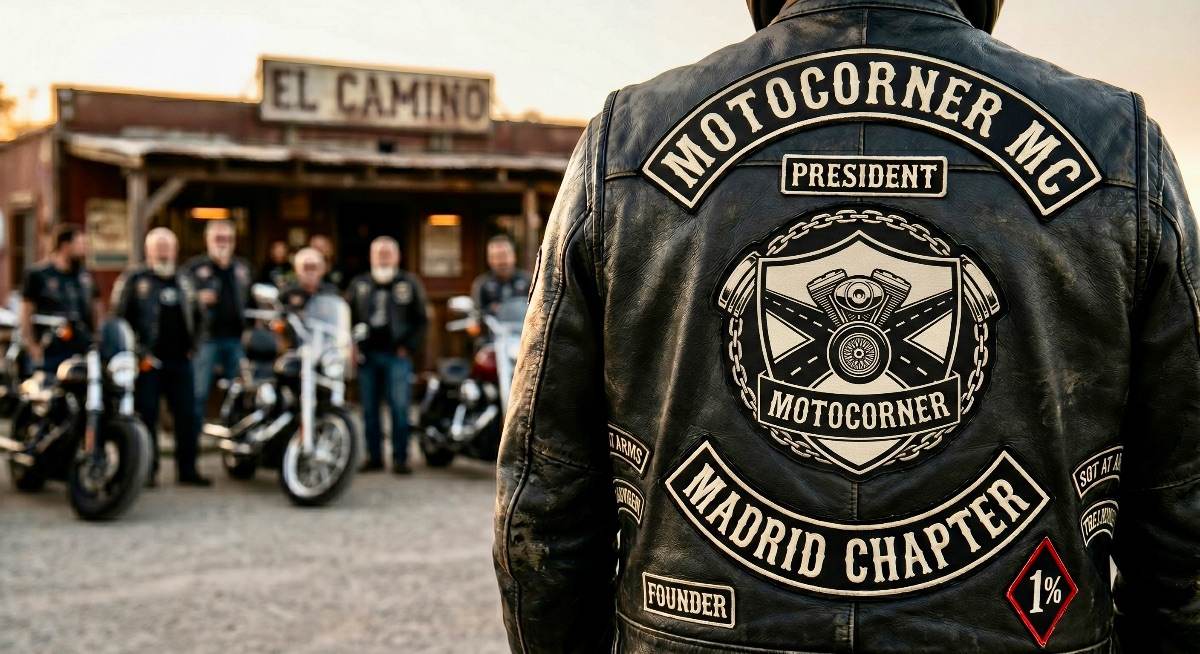
- Three-piece patch: This is the symbol of a traditional motorcycle club (MC) or "outlaw" clubs. It is divided into three clearly structured parts:
- Top Rocker: A curved piece worn on the upper back, indicating the club's name.
- Center Emblem (The "Colors"): This is the official logo and the most sacred element of the club.
- Bottom Rocker: Indicates the location, territory, or hometown that the club claims or represents.
A dominant club uses these rockers to mark its territory, and two rival clubs cannot use rockers with the same territory simultaneously without conflict.
Ranks and the Front of the Vest
While the back displays club pride, the front of the vest serves to show individual status.
It is common to see a rectangular patch with the letters MC, which formally identifies the organization as a "Motorcycle Club" that follows very strict selection protocols and rules. Rank patches are also placed on the chest, such as "President", "Vice President", or "Sgt. at Arms" (responsible for discipline and security).
On the other hand, the word "Prospect" indicates that the person is in a probationary period; they do not yet have the right to wear the full colors on their back and must demonstrate their commitment to the club's values.
Hidden Symbols: From the 1% to the Skull
In addition to official colors, bikers often wear smaller patches that tell personal stories or reflect merits and beliefs. Some of the best known and most respected are:
- The "1%" patch: It originated after the Hollister incidents in 1947, when the American Motorcycle Association (AMA) allegedly stated that 99% of bikers were law-abiding citizens. Rebel clubs proudly adopted the remaining "1%", making it a diamond-shaped patch to indicate that they live outside social conventions.
- The number 13: Refers to the thirteenth letter of the alphabet (M) and in certain circles is associated with marijuana use or trafficking.
- The Ace of Spades: Shows that the biker is willing to fight to the fullest to defend their club and their colors.
- Skulls: Represent rebellion and fearlessness of death, or that the rider has managed to escape a fatal accident.
- Eagles and wild animals: Very common symbols for strength, independence, and absolute freedom.
Golden Rules: Respect for the "Colors"
Patches are treated with almost religious reverence. In fact, there is a "no touching rule": placing a hand on another member's patch without their permission is a grave offense that violates their personal space and respect for the club.
Furthermore, it is a strict rule never to mix patches from different clubs on the same vest, as it is considered a sign of disloyalty. Finally, if a member decides to leave the group or is expelled, the rule is clear: the patches must be returned to the club. The "colors" are the property of the organization, not the individual, and cannot be worn as if they were old clothes after leaving the biker family.
Este artículo y su imagen se han elaborado apoyándose en la inteligencia artificial y siendo revisados por el equipo de MotoCorner antes de publicarse. Las imágenes son ilustrativas y pueden no corresponder a modelos o piezas reales.