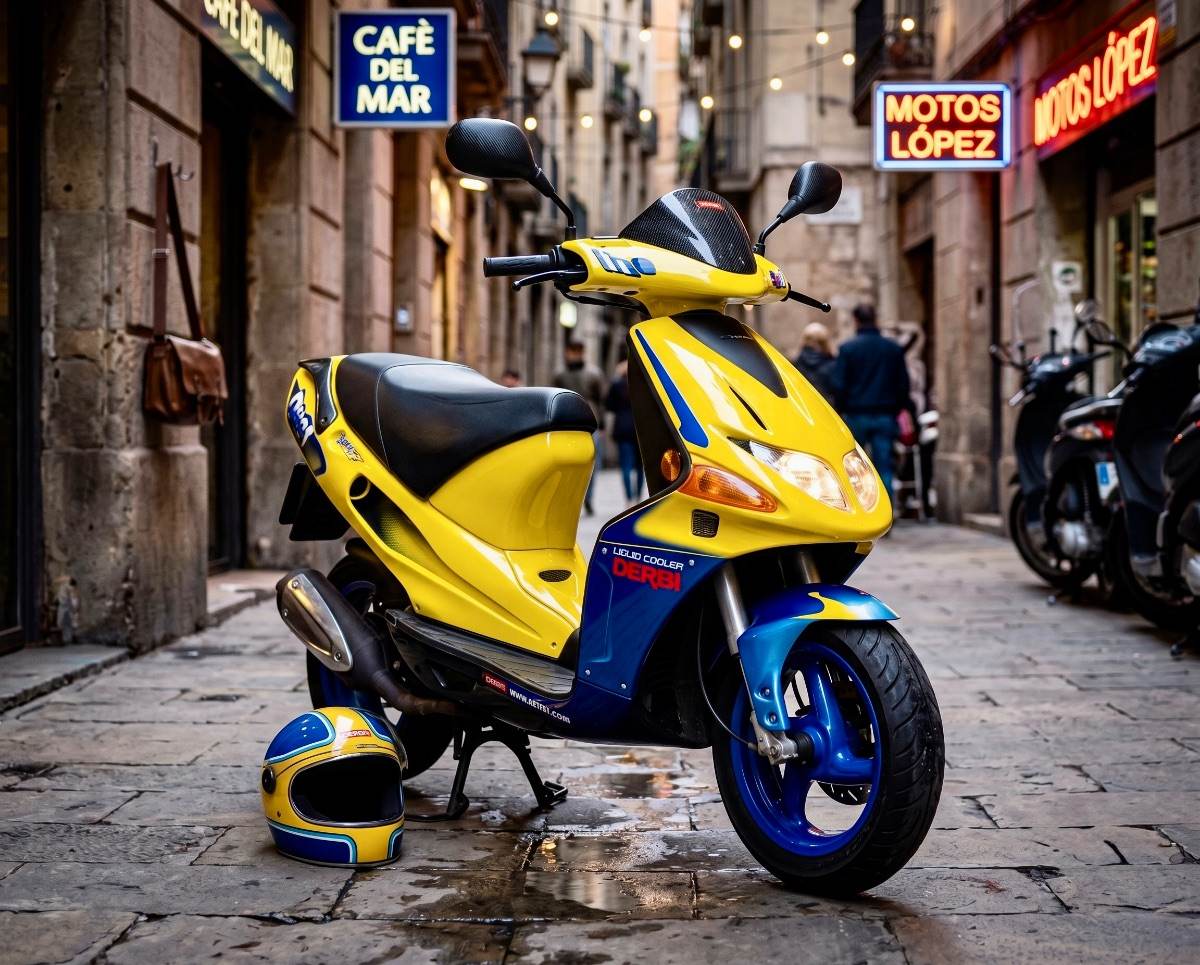
Complete Maintenance Guide for the Derbi GP1 Predator (2004)
Learn to maintain your Derbi GP1 Predator 2004 like new. Service intervals, variator, belt, and essential adjustments for this legendary 2-stroke scooter.
The 2004 Derbi GP1 Predator is, without a doubt, one of the most iconic 50cc sports scooters that populated our streets in the early 2000s. With its two-stroke engine (usually inheriting the reliable liquid-cooled Piaggio Hi-Per2 technology), its agile chassis, and its aggressive aesthetics, this Derbi remains a highly valued motorcycle by young people and nostalgic riders alike. However, due to its sporty nature and the years it has accumulated, a strict maintenance plan is non-negotiable.
At Motocorner.es, we have prepared this comprehensive thermal and mechanical guide so you can take care of it in your own workshop and get the most out of it, squeezing every drop of mixture.
Why is Maintenance Crucial on a 2-Stroke Scooter?
2-stroke mechanics are simple, vibrant, and explosive, but precisely because of their high RPMs and constant burning of oil with fuel, they require almost meticulous attention. From carbon deposits in the exhaust to accelerated wear of the variator, these bikes demand care. The first step to having total control is to add your model to a trusted manager by registering on our My Garage tool, which will allow you to keep a precise history and not miss any periodic maintenance.
Basic Maintenance Interval Table
In general, maintenance for a 50cc 2-stroke engine with these characteristics is divided into quick visual inspections, lubrication maintenance, and wear part replacements based on mileage. Here is a reliable chronological reference:
- Every 1,000 km or monthly: Check tire pressures, check coolant level, inspect brake pad wear, and check the oil mixture pump level.
- Every 5,000 km: Thoroughly clean the air filter sponge, inspect and possibly replace variator rollers, check the condition of the drive belt, and replace the spark plug.
- Every 10,000 km or annually: Replace the drive belt (essential), change the final drive gear oil, change the brake fluid, and thoroughly clean the carburetor.
To help you anticipate severe wear, we recommend consulting our guide to understand the lifespan of parts and know exactly when each scooter component needs to be retired.
Fluids and Lubrication: The Soul of the Derbi GP1
Mixture Oil and Pump
Since it lacks an oil sump for lubricating the crankshaft (as lubrication is provided with the fuel mixture), 2-stroke oil is the lifeblood of your Derbi GP1 Predator. It is highly recommended to use a high-end 100% synthetic oil to reduce carbon buildup in the exhaust port and on the piston. Periodically check that the teflon tube running from the pump to the carburetor has no bubbles or cracks from age.
Secondary Transmission Oil (Final Drive)
Although many users forget it thinking "2-strokes don't have oil," the rear gears in the hub need lubrication. The GP1 generally takes between 85 ml and 100 ml of specific transmission or gear oil, usually a SAE 80W90. Changing this every 10,000 km will ensure smooth rotation of the rear wheel and prolong the life of the gears. If you want to calculate the cost of this complete maintenance, whether done at a workshop or by yourself, use our maintenance cost calculator.
Liquid Cooling System
The 2004 Predator 50 in its GP1 version used liquid cooling (LC) to ensure performance without thermal fatigue. The coolant loses its anti-corrosive properties over time, even if the scooter has been stationary. The circuit must be bled and the fluid changed every 2 years. Make sure to use antifreeze specifically for aluminum engines, generally diluted to 30% or 50%, and bleed the air very thoroughly from the screw located next to the cylinder head to avoid dreaded overheating.
The Transmission: Variator, Belt, and Clutch
The magic of automatic scooters lies in their continuously variable transmission (CVT). If you notice that your Derbi has lost acceleration, cannot reach its limited top speed, or makes metallic noises from the left cover, the transmission is crying out for help.
- Variator and Rollers: The rollers (variator weights) become squared off with constant friction at high RPMs. When a roller loses its perfect cylindrical shape, the variator does not move smoothly. Their nominal weight is usually between 5.0 and 6.5 grams, depending on the exhaust system you have installed (stock or aftermarket). Check the ramp plate guides; if they have play, replace them.
- Drive Belt: The service limit is vital. At 10,000 km, even if it hasn't broken, the belt stretches and loses width. A narrow belt means a loss of top speed and the risk of fraying, which can jam the gears.
- Clutch and Bell: Check that the centrifugal clutch shoes have sufficient lining and that the bell does not show bluish areas (a sign of friction from excessive heat or glazing). You can lightly sand the shoes to prevent squealing on takeoff.
Carburetion and Intake
The respiratory system of this Derbi is classic: a Dellorto carburetor (usually 14mm to 17.5mm depending on country regulations). The air filter is a foam element. Its maintenance is the cheapest but the one the bike appreciates the most:
- Remove the sponge from the airbox.
- Wash it with water and degreasing soap (never with gasoline, as it will dissolve it).
- Let it dry completely and lightly soak it with specific filter oil before reinstalling it.
- Take the opportunity to remove the carburetor float bowl and clean the high and low jets with compressed air to stabilize the idle.
Chassis, Brakes, and Aesthetic Tuning
Braking in time on a light and nervous scooter is key to safety. The GP1 Predator has disc brakes. You must check every 5,000 km that there is still a good thickness of friction material on the pads. Likewise, DOT 4 brake fluid absorbs a lot of moisture; if its color is dark instead of transparent yellowish, renew it by completely bleeding the braking system.
As this is a scooter that is over two decades old, it is common for both plastics and paint to show signs of sun and the elements. To restore its original shine and protect exposed components, take a look at our guide to aesthetic maintenance of used motorcycles for tips ranging from polishing cloudy headlights to reviving the black plastics of the front shield.
Conclusion
Keeping a 2004 Derbi GP1 Predator up-to-date requires consistency, especially due to the peculiarities of a high-revving 2-stroke engine. However, its block reliability (if cared for with good synthetic oil and if the cooling circuit is not ignored) is legendary.
If during the maintenance process you encounter faulty parts that you prefer to entrust to a professional, you can easily find spare parts or workshops in our extensive directory of specialized stores and workshops in the sector. Additionally, if you have specific problems adjusting the carburetor or doubts when installing the variator, the community will quickly lend you a hand through our motorcycle forum for mechanical questions. Let's get to work, rider, the street awaits you with that unmistakable smell of mixture!
Este artículo y su imagen se han elaborado apoyándose en la inteligencia artificial y siendo revisados por el equipo de MotoCorner antes de publicarse. Las imágenes son ilustrativas y pueden no corresponder a modelos o piezas reales.