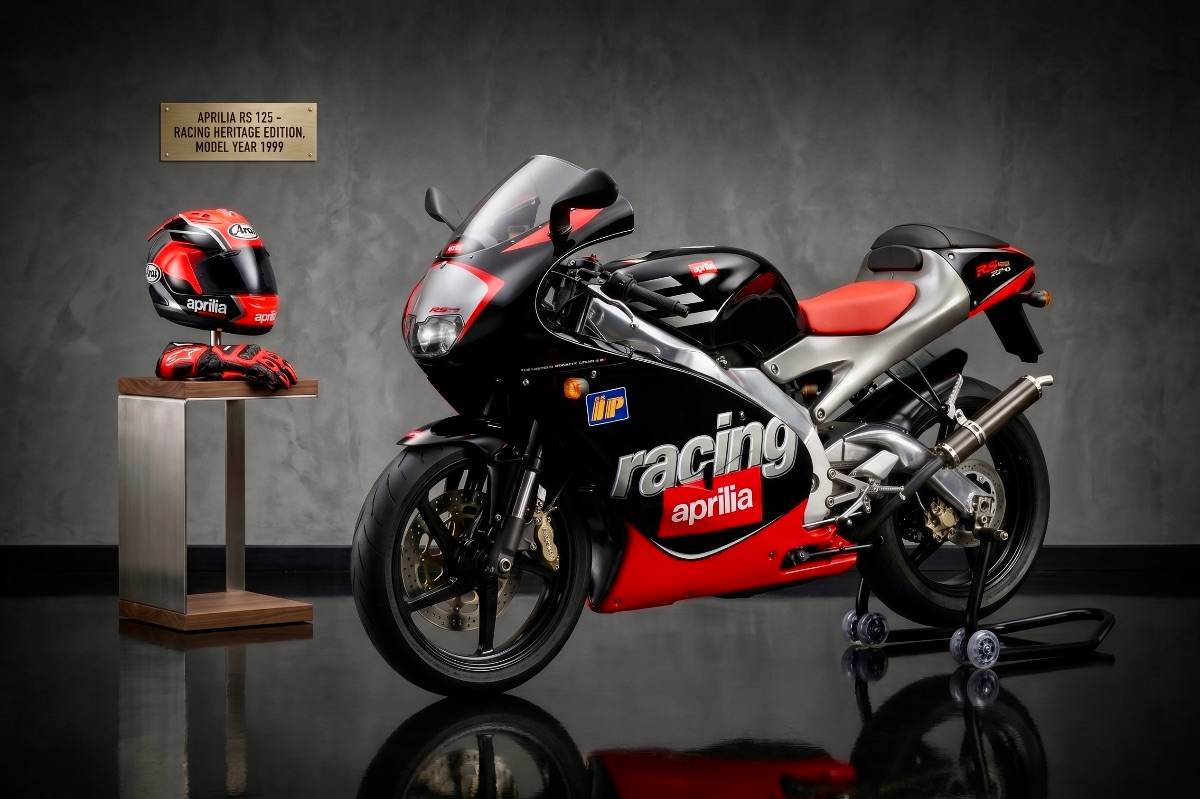
Aprilia RS 125 (1999) Maintenance Guide: How to care for the mythical 2-stroke sportbike
Everything you need to know to keep your 1999 Aprilia RS 125 in perfect condition. Discover the Rotax engine intervals, the exhaust valve, and the secrets of the 2-stroke engine.
Talking about the 1999 Aprilia RS 125 evokes the golden age of two-stroke sportbikes. With its unmistakable sound, that smell of burnt oil mixture, and a chassis that many modern, larger-displacement bikes would envy, the RS 125 (equipped at this time with the feisty Rotax 122 engine) is a true gem. But beware, enjoying this Grand Prix replica in the 21st century requires your absolute commitment: preventive maintenance is not optional, it is mandatory.
Unlike modern 4-stroke bikes, high-revving 2-stroke engines require care, patience, and constant checks. A lapse in carburetion or piston replacement will not be forgiven and will end in a fatal seizure.
Below, at Motocorner, we present the detailed maintenance guide so that your Aprilia RS 125 continues to devour curves like the first day.
Peculiarities of 2-Stroke Maintenance
If you're coming from conventional four-stroke engines, you need to completely change your mindset. There are no valve clearances to adjust or timing chains here, but in return, the cylinder-piston-rings assembly suffers much greater wear by working with double the explosions per cycle and reaching 11,000 rpm or more.
When planning maintenance, keep in mind that the budget for these bikes is usually higher if you use them daily, not so much in expensive parts but in frequency. To avoid nasty surprises at the end of the month, our motorcycle maintenance cost calculator is a fantastic tool to estimate how much it will cost you to ride a 2-stroke throughout the year.
Official and Recommended Maintenance Plan (Rotax 122 Engine)
Aprilia's manual specifies very precise intervals, although the most purist mechanics and enthusiasts recommend shortening them if the bike is used exclusively for sport or on the track.
Frequent Checks (Every 1,000 km or before each ride)
- Mixture Oil: Always check the level in the tank under the seat. Never let it run dry to prevent air from entering the pump system. Always use 100% synthetic oil for high-performance 2-stroke engines (like Castrol Power 1 Racing, Motul 800, or 710).
- Tire Pressure and Chain Condition: The engine's power and aggressiveness stress the transmission. Lubricate and tension regularly.
- Coolant Level: Keep an eye on the expansion tank. 2-stroke engines run very hot in the exhaust port area.
Every 4,000 km
- Spark Plug: Check and clean. The RS 125 typically uses an NGK BR10EG (or BR8EG if you want it to warm up faster when riding slowly, though this is risky in summer). If you see it is fouled or black, you will need to replace it.
- Air Filter: It is vital that it breathes well. Remove it, wash it (it's usually foam), dry it thoroughly, and apply specific filter oil before reinstalling it.
- Brakes: Check pad wear. The Serie Oro calipers need good quality friction material. If you detect leaks or rust, consult our guide to know when to retire each motorcycle part and how to replace them in time.
Every 8,000 km
- Exhaust Valve Cleaning (RAVE System): Essential. The guillotine that opens the passage for gases at high RPM gets clogged with carbon. Carefully remove it, clean it with oven cleaner or solvent, and ensure it slides smoothly in its cylinder housing, also checking the solenoid and cable.
- Piston Ring Replacement and Piston Check: At this mileage, it is highly likely that the piston rings have lost their seal. Measuring piston clearance is imperative.
- Crankcase Oil Change (Gearbox and Clutch): It takes about 600 ml (usually SAE 75W-90 or 10W-40 transmission specific). Drain when hot and remove any metal shavings from the magnetic drain plug.
Every 16,000 km: The Major Service
- Complete Piston, Connecting Rod, and Needle Bearing Replacement: Don't take chances. Exceeding 15,000 km significantly increases the risk of piston skirt structural fatigue or the connecting rod's needle bearing failing. Perform a 'top-end rebuild'.
- Brake Fluid and Antifreeze: Thoroughly bleed both systems.
- Fork Oil and Seals: The polished aluminum chassis requires forks that are up to par. Replace the oil to maintain that quick corner entry that makes the RS unique.
To avoid forgetting these critical intervals, the best approach is to keep everything noted down and digitized by activating automatic reminders in our My Garage section to manage your bike.
Carburetion: The True Heart of the RS 125
If you have the stock carburetor (usually a Dell'Orto PHBH 28 or the coveted VHSB 34 if it was fully derestricted), annual cleaning is mandatory. The low and high-speed circuits can easily become clogged after periods of inactivity, which is common today with classic bikes that aren't ridden daily.
Always check the intake manifold rubber, as it tends to crack with age. If there's a crack, it will allow parasitic air in, dangerously leaning the mixture and almost certainly causing the engine to seize.
Restoring and Buying a Legend
Nowadays, it's increasingly difficult to find 1999 RS 125 units (Harada, Rossi, or the mythical 'Chesterfield' livery that lasted a bit longer) in original, well-maintained condition. If you are in the process of buying or have just acquired a unit that needs a lot of love, first take a look at our guide to detailing and maintaining used motorcycles, where we explain how to restore its characteristic shine and remove rust from screws after years of dormancy.
Don't forget that, despite the headaches the carburetor or mixture might cause, their market value continues to rise exponentially. We invite you to visit our used motorcycle hub where community members often list true 2-stroke unicorns looking for new garages to care for them.
Conclusion
Maintaining a 1999 Aprilia RS 125 is both a responsibility and an act of love for the purest and most visceral form of motorcycling. If you strictly adhere to oil change intervals, monitor the piston's condition, clean its RAVE valve, and use the best synthetic oils on the market after gradually warming up the engine, this little machine will continue to provide you with sensations that no current 4-stroke can offer. Enjoy the buzz and the smell of the mixture!
Este artículo y su imagen se han elaborado apoyándose en la inteligencia artificial y siendo revisados por el equipo de MotoCorner antes de publicarse. Las imágenes son ilustrativas y pueden no corresponder a modelos o piezas reales.