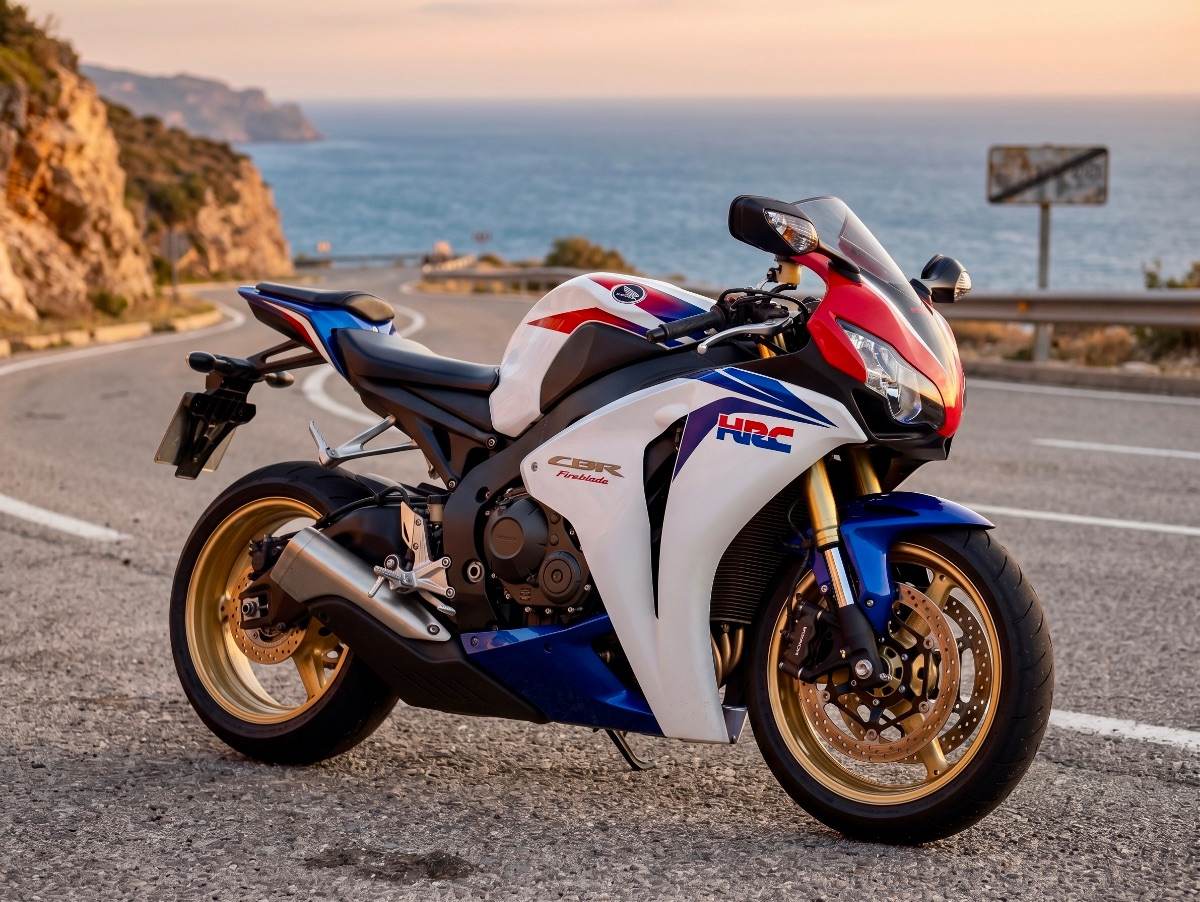
Honda CBR600RR (2009) Maintenance Guide: Get the Most Out of Your Supersport
Discover the official maintenance plan for the 2009 Honda CBR600RR. Learn about service intervals, recommended fluids, and key care tips to keep your bike in impeccable condition.
The 2009 Honda CBR600RR is, for many, one of the most balanced and effective supersport machines ever made. This model brought aerodynamic refinements, improvements in mid-range torque delivery, and, most revolutionary for its time: the option of the famous electronic C-ABS system, which proved that sporty braking could also be extremely safe.
However, an inline four-cylinder engine capable of exceeding 15,000 rpm demands absolute rigor in its care. In this complete guide, we break down the maintenance plan so that your CBR600RR rides today with the same smoothness as the day it left the dealership.
Official Maintenance Plan Intervals
Honda's workshop manual stipulates quite logical and standard service intervals for the CBR family. Maintaining this rhythm is vital. So you don't miss any important dates, we recommend using the digital tool to manage your motorcycle's maintenance and keep your records up to date in your pocket.
Minor Service (Every 6,000 km or 6 months)
Minor services are routine checks, designed to ensure that common wear items are within a safe range.
- General Inspection: Lights, horn, tires (recommended pressure: 2.5 bar front and 2.9 bar rear for street use) and fasteners.
- Fluids: Engine oil level, coolant level, and brake fluid.
- Drive Chain Kit: Cleaning, lubrication, and adjustment of chain tension (free play should be between 25 and 35 mm).
- Brake Pads: Visual check of thickness.
Intermediate Service (Every 12,000 km or 12 months)
Things get a bit more serious here, and it's time to get out the toolbox (or visit a professional).
- Oil and Filter Change: Use quality oil (generally 10W-30 or 10W-40, API SG or higher, meeting JASO MA standard). The crankcase holds approximately 2.8 liters with the filter change included.
- Spark Plug Inspection: Although Honda states they last up to 24,000 km in good condition, it's advisable to remove at least one, check for carbon buildup, and verify the electrode gap.
- Air Filter: Visual inspection or replacement depending on the atmospheric environment the bike is ridden in (if it's dusty, don't hesitate).
- Idle Synchronization: If the bike idles unevenly at low RPMs, it's a good time to check it.
It's important to be clear about the lifespan of all these replacement parts, so you'll find it very useful to consult this guide on when to change each part to avoid spending extra money unnecessarily or risking the bike by delaying.
Major Service (Every 24,000 km)
This is the dreaded (and necessary) "major service." In addition to everything above, it includes internal engine timing work.
- Valve Clearance Adjustment (Inspection): It is imperative to remove the rocker cover. Tight valves can cause severe damage to the valve seats and loss of compression. If this advanced mechanical task makes you nervous, it's best to look for specialized motorcycle workshops in your area that have the necessary shim kits.
- Spark Plug Replacement: It's time to install a new set of Iridium spark plugs (model IMR9E-9HES or equivalent from NGK).
- Coolant: Complete system flush and refill with 50% organic antifreeze (OAT).
Interestingly, this maintenance structure remains very much alive in the Japanese brand's philosophy today. If you wish, you can compare it by taking a look at the maintenance plan for the Honda CB650R to see the similarity in intervals for another four-cylinder model.
Critical Points: C-ABS and Suspension
If your 2009 Honda CBR600RR is equipped with the e-CABS (Combined ABS) system, you should know that bleeding the brake fluid is not a traditional process. Due to the independent pressure modulators and bypass valves, the procedure requires patience, a strict bleeding order for the various calipers and actuators, and ideally, following the workshop manual meticulously. The fluid (DOT 4) must be changed every two years mandatorily to prevent moisture from corroding the internal parts of this very expensive system.
On the suspension side, the 41mm Showa BPF (Big Piston Fork) that Honda introduced requires hydraulic oil in good condition. It is recommended to drain and replace fork seals and oil every 20,000 to 25,000 km to maintain the surgical precision in corners that characterizes the CBR.
Maintenance Costs
Owning a sportbike means digging a little deeper into your pockets, but the CBR600RR's engine is widely known for its rock-solid reliability. The biggest expenses will always come from tires (which it devours if you do track days or ride very aggressively) and the 24,000 km services. To get a more accurate idea of what to expect this year, use our virtual calculator to calculate the approximate maintenance cost based on your mileage.
Conclusion
The 2009 Honda CBR600RR embodies the pure and glorious essence of the 2000s supersports: light, nervous above 10,000 rpm, and with an aesthetic that masterfully withstands the passage of time. Being demanding with its official maintenance plan not only ensures your safety but also preserves the value of a motorcycle that is already a modern classic among two-wheel enthusiasts.
If during your garage sessions you get stuck with a stubborn nut, the fairing doesn't fit, or you simply want to know which tires are best for you this summer, don't hesitate to visit our motorcycle forum for mechanical questions and chat with other owners. Happy riding and throttle on!
Este artículo y su imagen se han elaborado apoyándose en la inteligencia artificial y siendo revisados por el equipo de MotoCorner antes de publicarse. Las imágenes son ilustrativas y pueden no corresponder a modelos o piezas reales.