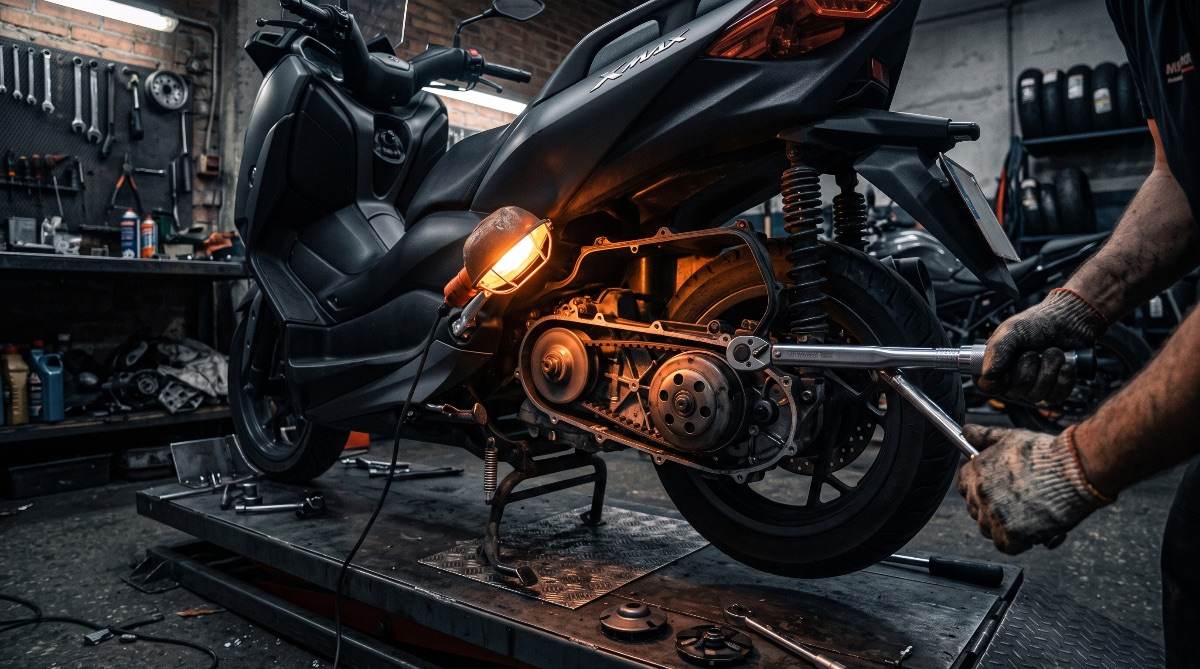
Yamaha XMAX 125 Maintenance Guide
Discover the ultimate guide to maintaining your Yamaha XMAX 125. Learn about intervals, wear parts, and tips to keep your scooter like new.
If you usually move around the city or its outskirts, it's very likely you've crossed paths with dozens of them or you're the proud owner of one yourself. The Yamaha XMAX 125 is, without a doubt, one of the undisputed best-selling scooters in Spain. It perfectly combines premium design, outstanding urban agility, and the great advantage of being able to be ridden with a regular car license (B).
However, like any good companion for daily commutes, it requires its dose of care. Keeping up with the Yamaha XMAX 125 maintenance is the real secret to ensuring its single-cylinder engine always performs at its best, avoiding jerks at traffic lights, excessive fuel consumption, and unexpected tow truck visits.
In this guide, we'll cover what you need to consider, how often you should go to the workshop, and what basic care you can perform yourself to extend the life of your maxiscooter.
The Importance of a Good Maintenance Plan
Yamaha's Blue Core engine is known for its efficiency and reliability, but urban motorcycles suffer from a very specific type of stress. Continuous starting and stopping, short trips where the engine sometimes doesn't reach optimal temperature, and city dust put both the mechanics and the variator (CVT) transmission system to the test.
Failing to adhere to the manufacturer's stipulated intervals often results in power loss, a jerky clutch feel, and premature wear of vital parts. If you want to plan financially and avoid surprises, you can use our tool to calculate maintenance costs quickly and as an estimate.
Service Intervals: When to Take Your XMAX 125 to the Workshop
Yamaha establishes a clear schedule based on both mileage and elapsed time (whichever comes first). Although it's always recommended to consult the manual for your specific year, the general intervals are as follows:
1,000 km Service (Break-in)
This is the most critical service in your scooter's life. During the first few kilometers, the engine parts are settling in, so it's normal for them to release small metal shavings. At this workshop visit, the engine oil and final drive oil are replaced, and any play in the bolts and steering is checked.
Services every 6,000 km (or annually)
This is the usual workshop visit schedule. At 6,000 km, it's time for:
- Engine oil change.
- Cleaning of the crankcase cover air filter (essential for the variator to breathe properly).
- Check of brake pad wear and tire pressure.
Services every 12,000 km (or every two years)
Here, the service becomes more in-depth. In addition to the above, it's usually time to change the spark plug, replace the main air filter, renew the rear drive oil, and perform a thorough visual inspection of the V-belt.
Major Services: 18,000 and 24,000 km
At 18,000 km, the mandatory replacement of the variator belt is usually stipulated. Don't risk stretching it; if it breaks while riding, the damage and scare are guaranteed. At 24,000 km, valve clearance adjustment will also need to be checked. Although the intervals differ slightly from the Yamaha TMAX maintenance, both scooters share the need to take maximum care of their automatic transmission to maintain smoothness.
Most Worn Parts on the XMAX 125
Intensive city use causes certain components to wear unevenly or prematurely compared to road bikes:
- Transmission Belt and Rollers: These are the heart of your XMAX's acceleration. If you notice the bike has lost acceleration from traffic lights or vibrates excessively when starting to move, it's likely the rollers have become "squared" from use.
- Clutch Shoes: In traffic jams, the scooter's centrifugal clutch is constantly slipping. Sometimes they become glazed (harden and slip), causing annoying metallic squeaks when starting off.
- Tires: Scooter wheels, being smaller in diameter, rotate more to cover the same kilometer as a conventional motorcycle. Additionally, in the city, we tend to wear them out in the center. Check the wear indicators periodically.
- Brake Pads: Constantly braking from traffic light to traffic light wears out the pads sooner than you might think.
If you believe several of these replacements are due at the same time and are worried about your wallet, we recommend checking service prices in Spain to get an idea of typical hourly and consumable rates.
What to Check at Home vs. What to Leave to the Mechanic
You don't need to be a mechanical expert to perform basic checks on your motorcycle, but it's important to know where the limits are.
Home Maintenance (DIY):
- Tire Pressure: Do this when cold at least once a month. Low pressure on the XMAX makes it sluggish and significantly increases consumption.
- Oil Level: Easily checked using the dipstick on the filler cap. Put the bike on its center stand on a flat surface, unscrew the dipstick, clean it, reinsert it (without screwing it in), and check the level.
- Coolant Level: The expansion tank is accessible. Always ensure the level is between the Min and Max marks.
Better at the Workshop:
- Belt and Roller Replacement: Requires specific tools (like an impact wrench or variator blockers) and tightening everything with the correct torque.
- Valve Adjustment and ABS Bleeding: These are more sensitive tasks where an error can be very costly.
- Brake Fluid Replacement: Changing the fluid and correctly bleeding the ABS circuit is not something I recommend doing without experience.
If you're someone who likes tinkering with changing the windscreen or installing an exhaust, and you get stuck with a DIY project, remember you can always ask your questions in the forum where hundreds of bikers share their experiences.
Extra Tips for Daily Use
To get the most out of your Yamaha's reliability, adopt certain habits. First, warm up the engine. Don't start it and immediately accelerate hard. Let it idle for at least 30 seconds or a minute so the oil properly lubricates the entire cylinder, especially on cold mornings.
Second, be careful with potholes and bumps. Scooter suspensions have limited travel and suffer a lot in poorly paved urban areas. If you notice the front suspension sinking too much or see oil stains on the fork tubes, don't hesitate to go to specialized motorcycle workshops to replace fork seals and oil.
Conclusion
Yamaha XMAX 125 maintenance is not complicated or excessively expensive if you are disciplined. Adhering to services every 6,000 km, not skipping belt changes, and warming up the bike when cold are the keys to making this fantastic 125cc last a lifetime, offering you ridiculous fuel consumption and a lot of urban fun.
To keep track of all this from your mobile without missing any important appointments, Add your XMAX to My Garage and start managing your maintenance history, recording expenses, and creating an impeccable record for your riding companion.
Este artículo y su imagen se han elaborado apoyándose en la inteligencia artificial y siendo revisados por el equipo de MotoCorner antes de publicarse. Las imágenes son ilustrativas y pueden no corresponder a modelos o piezas reales.