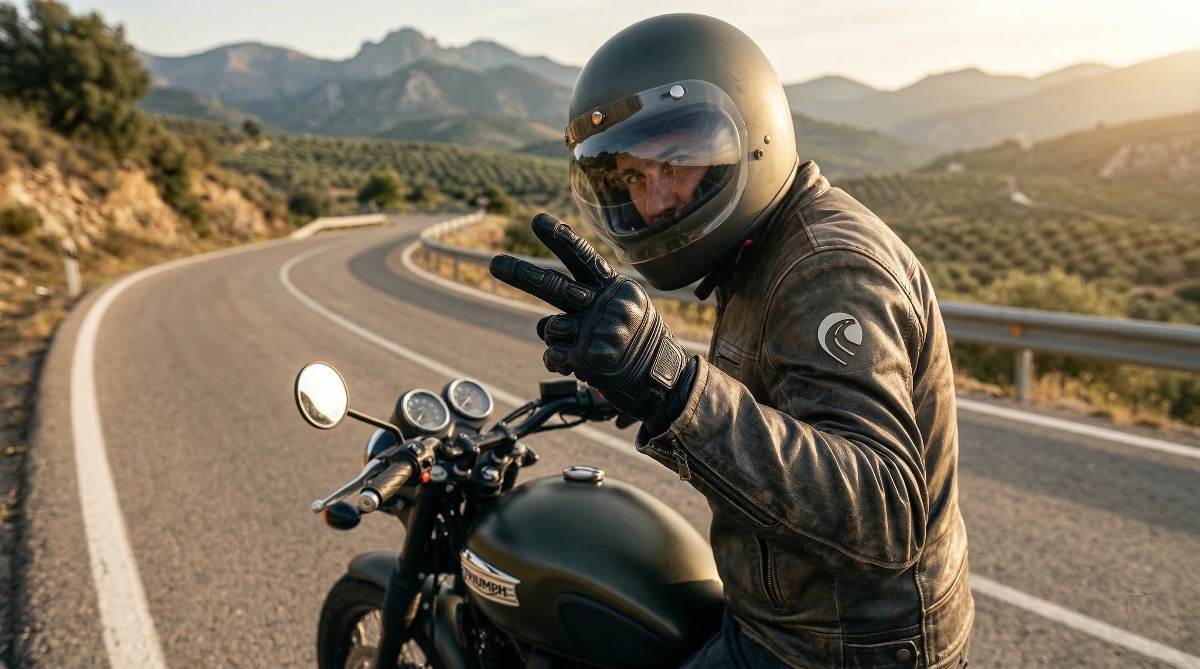
The Curious Origin of the "V" Motorcycle Greeting: More Than Just a Gesture
Discover the fascinating history behind the classic "V" biker salute. From the Hundred Years' War to Barry Sheene's victories, learn the meaning of this and other essential biker code gestures.
You're on the road riding your motorcycle and a biker passing in the opposite lane greets you by making the letter "V" with their index and middle fingers. If you're new to the world of two wheels, you might be surprised, but you've just experienced the biker wave, the ultimate symbol of brotherhood, respect, and camaraderie in the motorcycle community.
This sign language is universal; it doesn't understand languages and is understood anywhere in the world. But have you ever wondered where this tradition exactly comes from and why we use those two fingers?
Why with the left hand and not otherwise?
Before diving into the history, there's a very important technical reason why this greeting is almost always done with the left hand and arm: the right hand must remain at all times controlling the throttle and front brake to maintain control and traction.
Furthermore, a few decades ago, the usual greeting among bikers consisted of flashing headlights. However, as traffic laws became stricter and this practice was prohibited (due to dazzling other drivers or being confused with police control warnings), bikers had to standardize the manual "V" greeting to continue communicating legally and safely.
A Journey Through Time: From the Middle Ages to World War II
The origin of the "V" fingers is a fascinating mix of military history and popular culture that dates back several centuries:
- The Battle of Agincourt (Hundred Years' War): The most distant theory takes us back to the year 1415. It's said that French soldiers threatened to amputate the index and middle fingers of the fearsome English archers if they captured them, so they could never wield a bow again. After the unexpected English victory, the surviving archers showed their two intact fingers to the French troops as a sign of victory, provocation, and mockery.
- The V for Victory and War Messengers: Moving forward to World War II, British Prime Minister Winston Churchill popularized the "V" gesture (with the palm facing outwards) as a symbol of victory and resistance against the Nazis. During the terrible bombings over England, motorcycle messengers (dispatch riders) adopted this gesture. As they crossed paths on debris-filled roads, they would make the "V" to encourage each other and show respect, knowing the extreme danger they faced on each mission to deliver correspondence.
The Idols Who Popularized the Gesture
There are anecdotes that place an initial "generic greeting" in 1904 when Arthur Davidson and William Harley crossed paths on the road and greeted each other, a gesture that was replicated by other bikers upon seeing the brand's founders. However, the true responsible parties for globalizing the "V" as a standard in civilian motorcycling were two icons of the 70s:
- Barry Sheene: The charismatic British rider, two-time 500cc world champion in 1976 and 1977, is considered the first modern media-savvy rider. Sheene, who broke the mold by wearing colorful leathers and decorated helmets, had a habit of celebrating his victories by crossing the finish line and raising his "V" fingers to the cameras and the crowd. His immense popularity led millions of fans to start imitating him on the roads. Discover more about the history of the word "moto" on our blog.
- Steve McQueen: The legendary actor and motor enthusiast also helped spread the reach of this greeting as a symbol of sophisticated rebellion by being photographed making the "V" during the filming of the movie Le Mans in 1971, an iconic image that went around the world.
Beyond the "V": Other Greetings in the Biker Code
Although the "V" is the most famous greeting (which is often performed pointing towards the ground at a 45-degree angle), non-verbal communication on a motorcycle includes other gestures of camaraderie and prevention that every good biker should know:
- The foot wave: Imported directly from racing, it consists of extending the right leg when overtaking another motorcyclist or a car that has yielded way. It's a way of saying "thank you" very visibly without having to let go of the right-hand throttle. Additionally, extending a leg (left or right) is also commonly used to signal to the rider behind that there is a danger or obstacle on the road on that side, such as a pothole or loose gravel.
- Helmet on the ground: If you ever see a motorcyclist stopped on the shoulder with their helmet placed on the ground behind the bike, don't just pass by! In the biker code, this is the universal distress signal to indicate that they have suffered a breakdown or accident and need urgent assistance. You can find spare parts and accessories at the motorcycle shops in your area. Conversely, if the helmet is resting on the seat or handlebars, it means everything is fine and it's just a temporary stop.
In conclusion: The next time you cross paths with another two-wheeled companion and raise your fingers to form that mythical "V," remember that you're not just making a simple greeting. You are expressing your willingness to offer encouragement and providing spiritual companionship on the journey. You are keeping alive a centuries-old tradition of resilience and victory, and you are fueling a deep biker brotherhood that knows no borders, languages, or types of motorcycles. Happy riding and V'ss to all! If you're interested in delving deeper into biker culture, be sure to read about the biker vest code and its patches. To plan your next adventure, explore the most spectacular motorcycle routes in Spain, or join local motorcycle clubs to share your passion for two wheels.
Este artículo y su imagen se han elaborado apoyándose en la inteligencia artificial y siendo revisados por el equipo de MotoCorner antes de publicarse. Las imágenes son ilustrativas y pueden no corresponder a modelos o piezas reales.