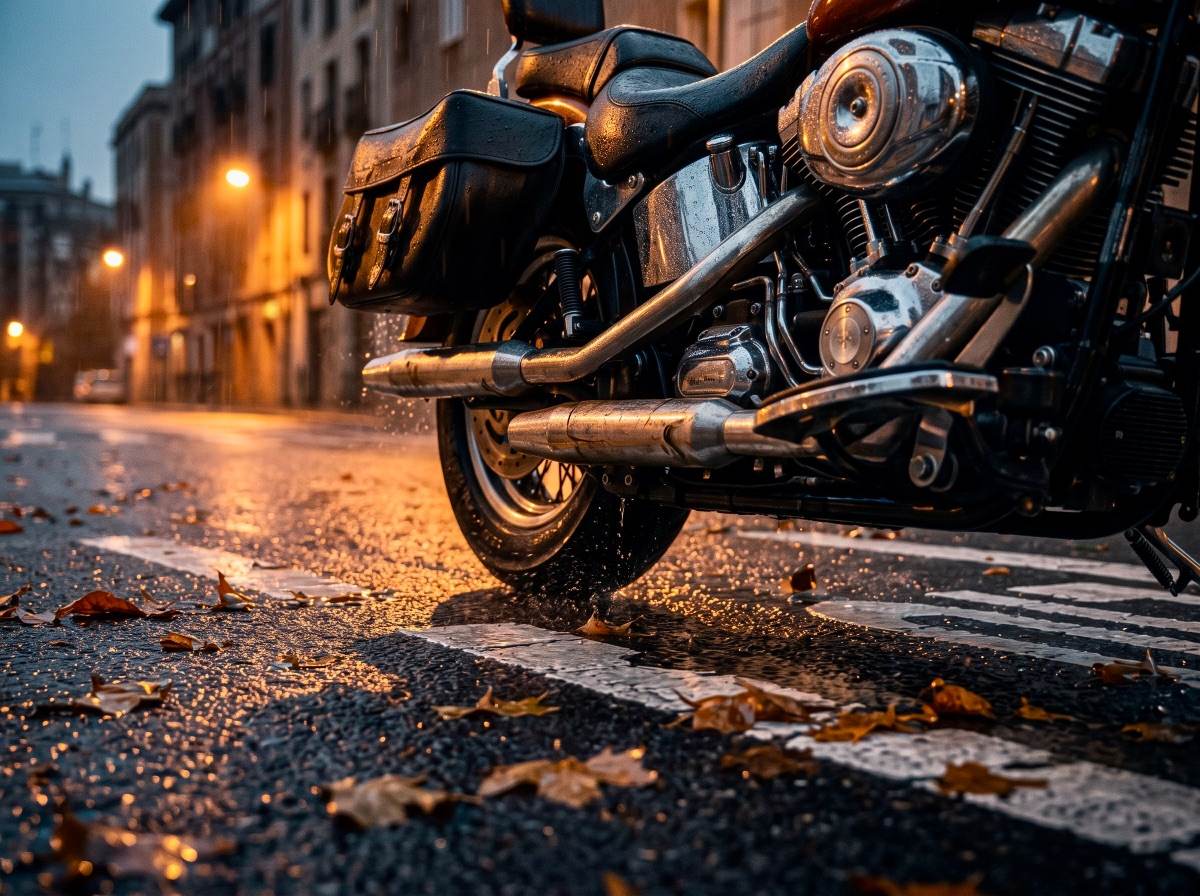
Riding a motorcycle in the rain: how to master wet asphalt, leaves, and paint
The first autumn rains turn the streets into a challenge. Discover the keys to riding your motorcycle safely on wet asphalt, dry leaves, and the dreaded road markings.
The end of summer marks a turning point for all motorcyclists. Gone are the long days of riding with hot asphalt and seemingly infinite grip. With the arrival of autumn, the dreaded first rains appear, a meteorological phenomenon that transforms our favorite roads and city streets into true skating rinks. To face this season with maximum safety, it is vital to adapt both our mindset and our equipment; in fact, leading manufacturers in the sector such as Alpinestars SE have developed waterproof membranes and specific thermal protections that make a big difference between enjoying the ride or suffering from the cold and humidity at every traffic light.
Riding in the wet doesn't have to be an ordeal if you know how to read the terrain and prepare your bike. A summer storm is not the same as the thin layer of autumn rain mixed with accumulated dirt. In addition to protecting your body with good gear, you must understand the real function of your motorcycle's fairing to correctly deflect water and cold wind, keeping you much more stable and aerodynamic as you devour kilometers under a gray sky.
The invisible danger of the first rains
The greatest risk does not come when a spectacular downpour occurs, but during those first few minutes when it starts to rain softly or "drizzle." During the dry summer months, the asphalt accumulates a large amount of dust, tire rubber debris, grease, oils, and antifreeze leaked by cars.
When the first drops of water fall, all these residues rise to the surface because oil is less dense than water. The result is a soapy, viscous barrier between your tires and the road. During these initial moments, caution must be multiplied by ten. Grip is drastically reduced, causing any sudden movement to result in an immediate loss of traction.
Urban and interurban traps: paint, manhole covers, and leaves
Riding in the rain requires constant reading of the surface you are riding on. Elements that are barely noticeable when dry become traps in the wet that can cost you a nasty fall.
Crosswalks and road markings
The white paint of crosswalks, solid lines, and directional arrows is, historically, the urban motorcyclist's arch-nemesis. Although current regulations require the use of anti-slip paints, the reality in many cities and secondary roads is very different. When riding over these lines, the golden rule is to keep the bike as upright as possible, avoid any strong acceleration, and above all, do not touch the front brake. If you have to cross a wide crosswalk, do so by releasing the brakes and maintaining a constant speed.
Manhole covers and metal grates
Wet metal offers a coefficient of friction close to zero. Manhole covers and ventilation grates for subways or parking lots are often located directly in the tires' natural path. Try to anticipate and avoid them with a slight counter-steer, but if one surprises you mid-corner and you can't avoid it, lift the bike slightly, ride over it without braking or accelerating, and lean gently again once the rear wheel has passed the metal.
Dry autumn leaves
On interurban routes and mountain sections, fallen leaves are the most treacherous danger of the season. A layer of wet leaves is literally worse than ice, as it hides the real condition of the asphalt, potholes, or stones, and they slide over each other. If you encounter a carpet of leaves, drastically reduce speed using engine braking before reaching them and cross them very smoothly. If you are traveling with others in these environments, it is crucial to review the basic rules for group rides and agree to increase the distance between members to have more reaction time in case of an unexpected slip.
Adjust your technique: safety distance and smooth braking
Basic physics tells us that braking distance increases considerably in the wet. Therefore, your anticipation time must grow proportionally. Increase the safety distance from the vehicle in front of you. This will not only give you valuable braking margin but will also prevent you from being splashed by the dirty water spray kicked up by their tires, which obscures your visor and blinds you.
Regarding braking, the keyword is "progressiveness." Forget about slamming on the brakes. Use the rear brake more than usual to stabilize the bike and apply the front brake with gradual pressure. The goal is to transfer weight to the front wheel little by little, allowing the tire to bite the asphalt and expel water before demanding maximum grip. Whenever possible, use engine braking by downshifting smoothly, avoiding releasing the clutch suddenly so that the rear wheel does not lock up.
Your motorcycle's condition: tires and visibility
Your skill as a rider will be useless if your motorcycle is not prepared for the rain. Tires are your only contact points with the ground. Their tread must have sufficient depth (never less than 1.6 mm, although on motorcycles it is recommended to change them before reaching the wear indicators) to evacuate the necessary liters of water per second. Check that the pressures are correct as specified by the manufacturer. To keep track of when to change them, we suggest managing your motorcycle's maintenance regularly, noting mileage and wear dates.
Furthermore, when bad weather arrives, it is advisable to carry out a quick and complete motorcycle inspection focusing on the condition of the brake pads and lights, as being seen in the rain is as important as seeing where you are going.
Speaking of seeing, a fogged-up visor is one of the most serious stress factors in a storm. If you don't already use an anti-fog system like Pinlock, now is the time to install it or look for helmets that come factory-prepared. To ensure perfect vision, we recommend choosing a good motorcycle helmet with good chin and nose ventilation to deflect your breath.
Conclusion
Riding in the rain should not cause you panic, but it does demand respect, anticipation, and extremely fluid movements. Stay calm, dress warmly in waterproof clothing, increase distances, and avoid abrupt maneuvers on painted lines and metal covers. You'll see that, with the right attitude and equipment, riding in the wet has its own poetry. And remember that whenever the sun comes out and the asphalt dries, you can use your phone again to record and share your GPS routes discovering those unique autumn landscapes we love so much.
Featured Recommendation
Limited Edition · Alpinestars marTHAInator (Jorge Martín)
The Alpinestars S-R10 marTHAInator LE helmet combines 4Impact technology with Jorge Martín's official design. Very limited units for the SP26 season.
Este artículo y su imagen se han elaborado apoyándose en la inteligencia artificial y siendo revisados por el equipo de MotoCorner antes de publicarse. Las imágenes son ilustrativas y pueden no corresponder a modelos o piezas reales.